
The Honorable Judge James A. Shriver
![]() | Say hello to our new Director/Coordinator, Paige Olson! Paige has worked for Juvenile Court for 32 years and has a great deal of experience working with families in a hands-on manner. Early on, Paige was extensively involved in helping youth going into out-of-county residential treatment, and then later transitioned into the role of Probation Supervisor. Paige has recently been invited to join Lead Clermont, a think-tank for key individuals in our county to be able to both develop and leverage their leadership skills while developing and nurturing collaborative relationships throughout the county and beyond. Once you meet Paige you’ll understand why the invitation was made, namely, because of her warm and energetic personality, her proactive focus on meeting the needs of others, her care and thoughtfulness, her wisdom, and her ability to set others at ease. The Resource Center is truly blessed to have her at the helm, with exciting plans for growth already typed-up and ready to be pursued. If you are connected to an agency or entity within the county that you want to make sure families will be made aware of through the work of the Resource Center, please do not hesitate to reach out to Paige right away! |
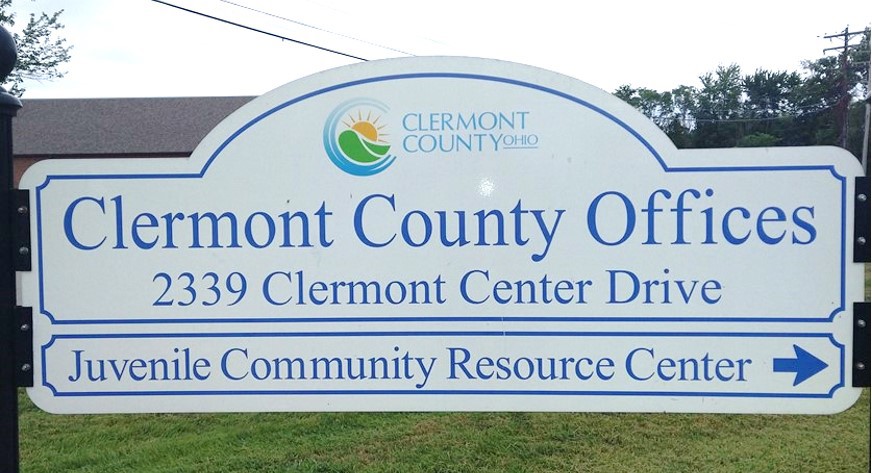
![]() | Address: 2339 Clermont Center Dr. – Batavia, OH – 45103 Phone: 513.732.7697 Email: Paige Olson can be reached directly at polson@clermontcountyohio.gov, or, you can also use this general email for the Resource Center as well: ccjcrc@clermontcountyohio.gov Hours: 8:00 – 4:00 PM, Monday through Friday |

Introducing the new Clermont County Juvenile Community Resource Center!
Sign-up for our Monthly Newsletter!
Monthly Newsletter Archive
Thanks to the vision and initiative of The Honorable Judge James Shriver (Probate and Juvenile Courts) which led to the securing of a significant grant from the state, the goal of the CCJCRC (“RC”) is to provide front-end help to a youth and their family, help that connects the family with resources while empowering the youth to stay out of Juvenile Court … and out of the detention center as well. The Resource Center’s overarching mission is to prevent court involvement altogether. In other words, families coming to the Resource Center do not have to be concerned about the Resource Center’s parent organization being Juvenile Court. Again, the goal is to keep kids out of the juvenile justice system altogether; nor will kids or parents ever be court-ordered to work with the Resource Center. So, let’s look at an example of a family that could be served, namely, the family of a youth struggling with truancy: Prior to the existence of the Resource Center, a truant child could easily end up in court. But what if that child can come to the Resource Center and, rather than being confronted right away with possible legal consequences, they can begin to really feel heard and begin to engage in a problem-solving process without the fear of sanctions? What if their parent(s)/custodian(s) can also begin to really feel heard and supported so that, instead of having to start reacting to decisions being made for them, they can begin to work with our staff in the context of investing options in their own problem-solving process? Resource Center staff will work hard to identify unmet needs and to address those unmet needs with dignity, respect, and care. If a child is truant because of bullying at school, the Resource Center staff can empower the custodial parent to work with the school to resolve the bullying situation; or, if the child says they can’t do the work, R.C. staff will work hard to identify those factors that are blocking learning for that child. In addition, the Resource Center will also be able to provide some key mental health and life-functioning assessments to help aid in the problem-solving and referral process. While families can always use the RC as a type of “home base,” the goal is to get them connected with and handed off to appropriate resources in the community as quickly as possible. Participation in RC services is 100% voluntary and, again, will never be court-ordered. If a referral comes to the RC from court, such as when a youth ends up in the detention center for one night and has their detention hearing the next day, it will be because a youth is very young or because their charge was not severe and the court is willing to remove them from the court process altogether … again, in the hopes that a non-court-based intervention will be most beneficial at that time. Wow! – over 40 kids struggling with truancy have already been helped from 3/25 until now!